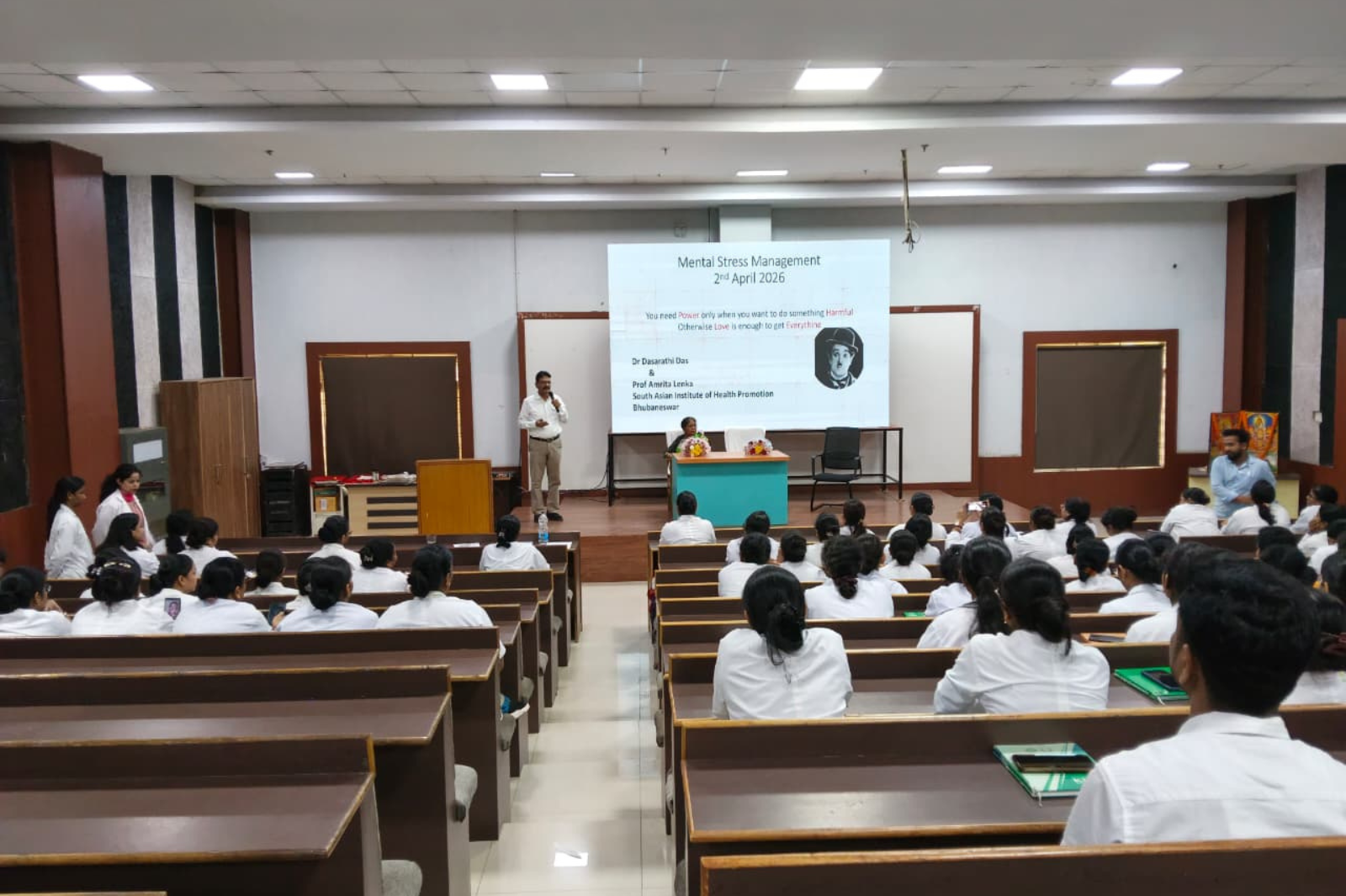
A workshop on “Mental Stress Management” was successfully conducted on 2nd April, 2026 at Kalinga Institute of Medical Sciences (KIMS), Bhubaneswar. The program aimed to raise awareness about mental health, understand the impact of stress in healthcare and academic settings, provide practical strategies to manage stress effectively.The program began with a warm welcome to all dignitaries, speakers and participants.
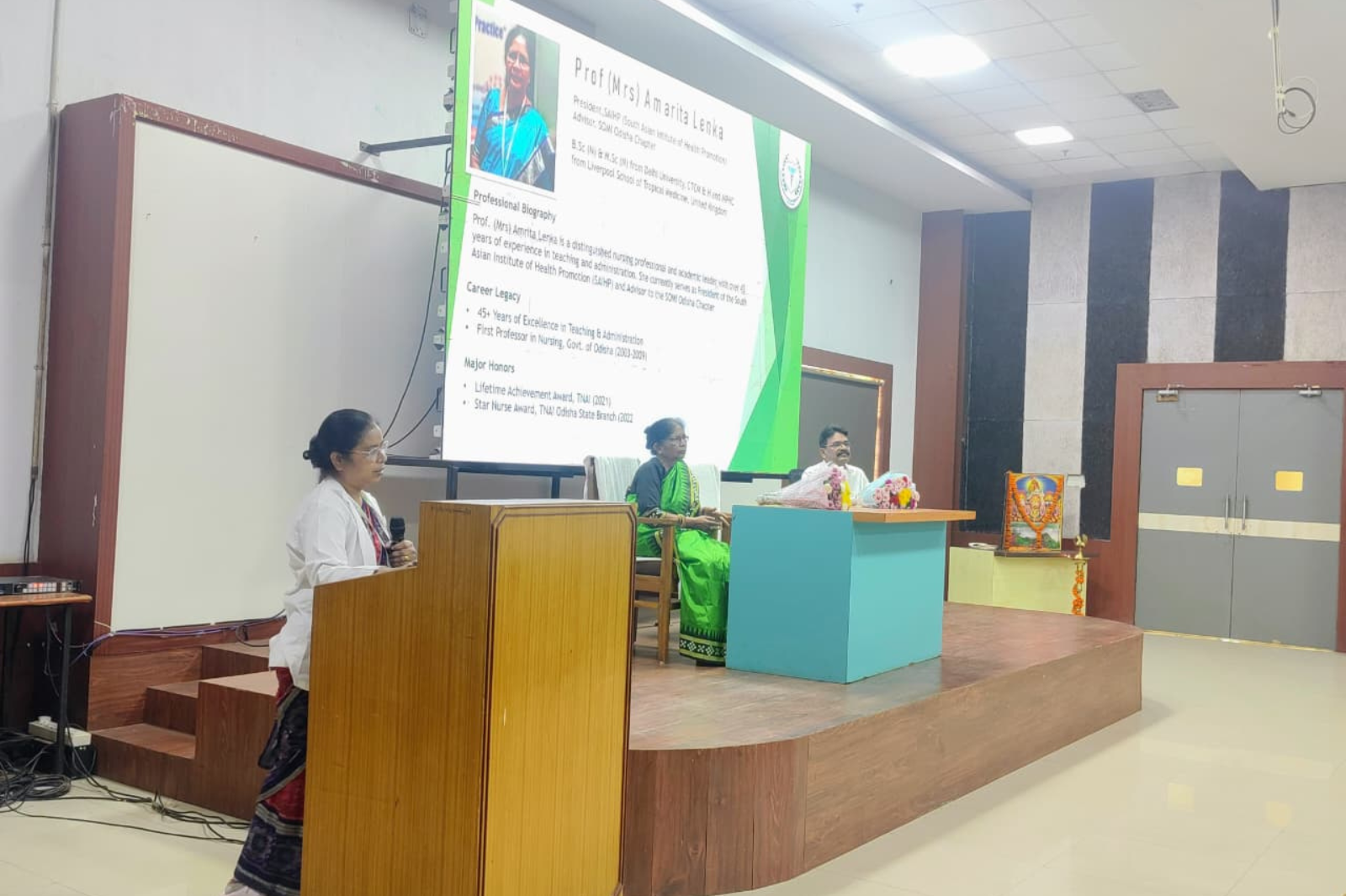
The session was introduced by Ms. Keka Roy (Nursing Educator) and Ms. Pratikshya Behuria (Clinical Instructor), who outlined the objectives of the workshop. The formal welcome address was delivered by Mrs. Gitanjali Mohanta, Nursing Superintendent, who emphasized: The growing importance of mental health awareness in healthcare; the need for supportive institutional environments and the role of emotional stability and resilience among professionals.
The workshop featured an insightful address by Prof. Amrita Lenka, a distinguished nursing professional with more than 45 years of experience in clinical practice, teaching, and administration. She has been recognized nationally for her contributions, including the “Lifetime Achievement Award” by the Trained Nurses’ Association of India (TNAI) in 2021. She currently serves as the President of the South Asian Institute of Health Promotion (SAIHP) and Advisor to the Society of Midwives India (SOMI) Odisha Chapter.
Prof. Lenka, shared valuable insights on Mental health awareness in healthcare settings; Importance of emotional resilience; Maintaining work-life balance; and Creating supportive work environments. She also highlighted her contributions to Nursing Education and recognition at the national level.
The workshop also included an address by Dr. Dasarathi Das, Secretary of the South Asian Institute of Health Research and former Scientist-F at the Indian Council of Medical Research Dr. Das discussed on key issues such as “The link between mental stress and public health; the importance of awareness among healthcare professionals; and adoption of coping strategies such as mindfulness and peer support. His talk emphasized integrating mental well-being into healthcare practices.
The workshop covered several important aspects, including: Understanding stress and its effects on physical and mental health; Differentiating between positive and harmful stress; Techniques such as mindfulness, breathing, and relaxation; Importance of emotional resilience; Maintaining a healthy work-life balance; and Building supportive academic and healthcare environments.
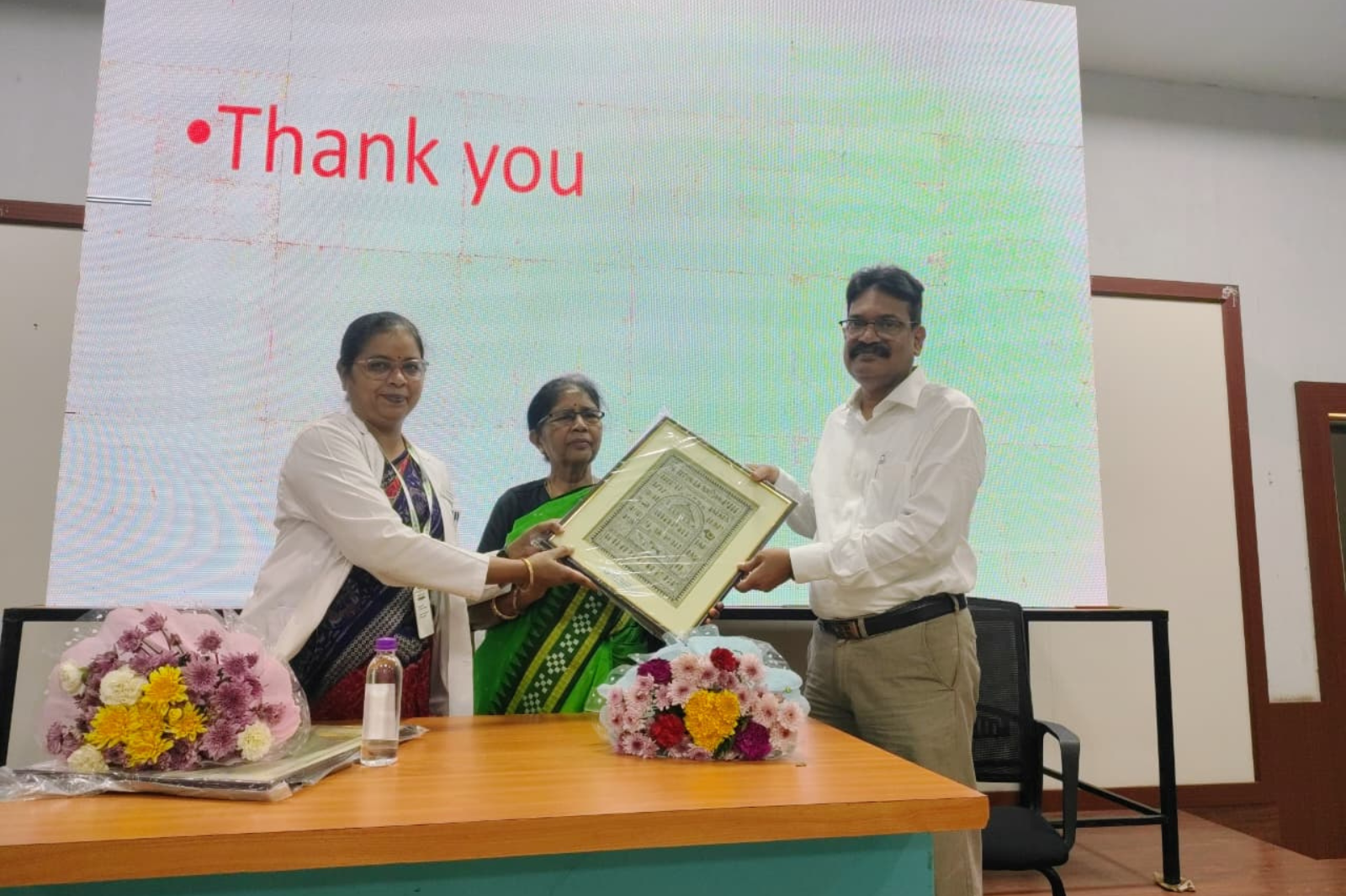
The workshop concluded on a positive and reflective note, reinforcing that mental well-being is crucial for personal growth, academic success, and professional excellence, especially in the healthcare sector. The program ended with a vote of thanks delivered by Mrs. Dipali Mohanty(DNS), expressing gratitude to all dignitaries, speakers, organizers, and participants for their valuable contributions and support.